Computational approaches for dynamically loaded low-ductility metals

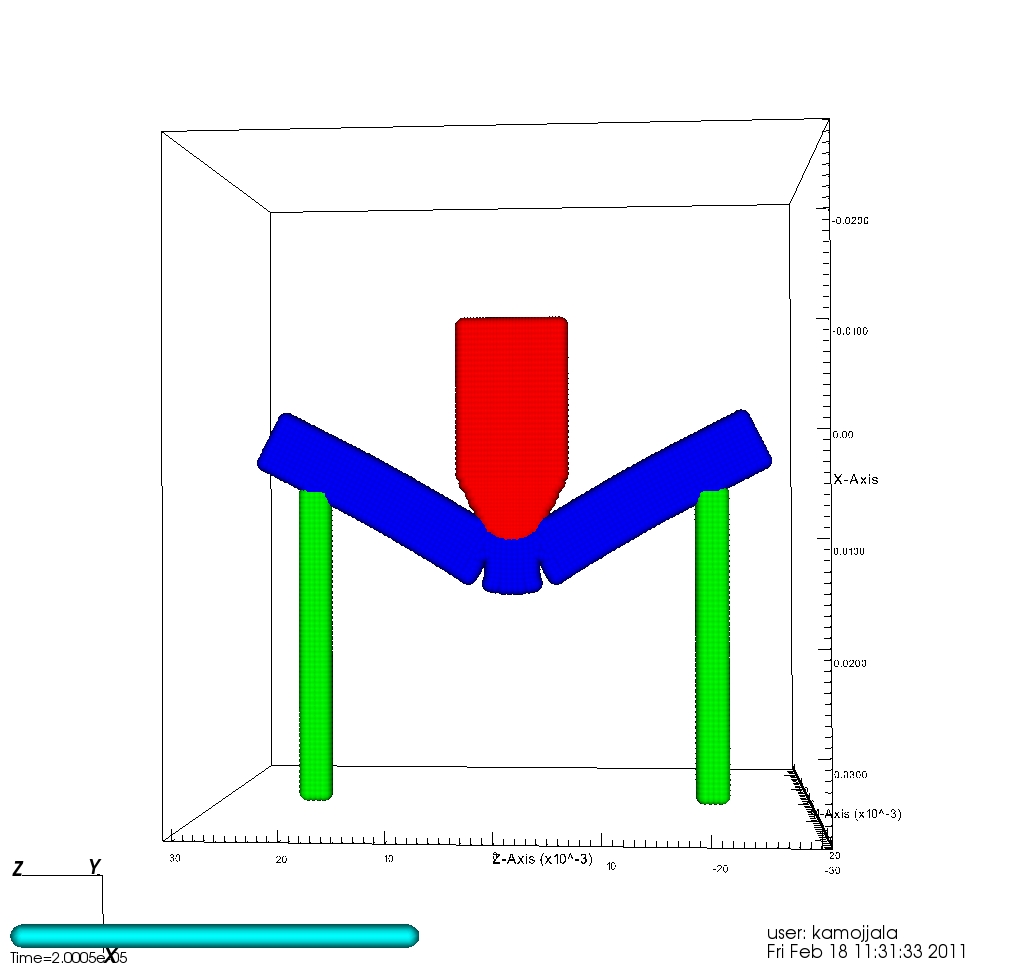
A generic Charpy simulation showing fracture at locations not observed in the lab

Eulerian simulations of un-notched Charpy impact specimens, provide unsatisfactory results in that experimentally observed bend angle, absorbed energy, and fracture mode are not reproduced. The Utah CSM group is independently confirming poor simulation fidelity using conventional constitutive models. From there, we aim to identify the cause, and investigate solutions using capabilities in the Kayenta material framework.

UofU Contributors/collaborators:
Krishna Kamojjala (PhD student, Mech. Engr., UofU)
Scot Swan (MS student, Mech. Engr., UofU)

Publication: On a viscoplastic model for rocks with mechanism-dependent characteristic times

A.F. Fossum and R.M. Brannon (2006)

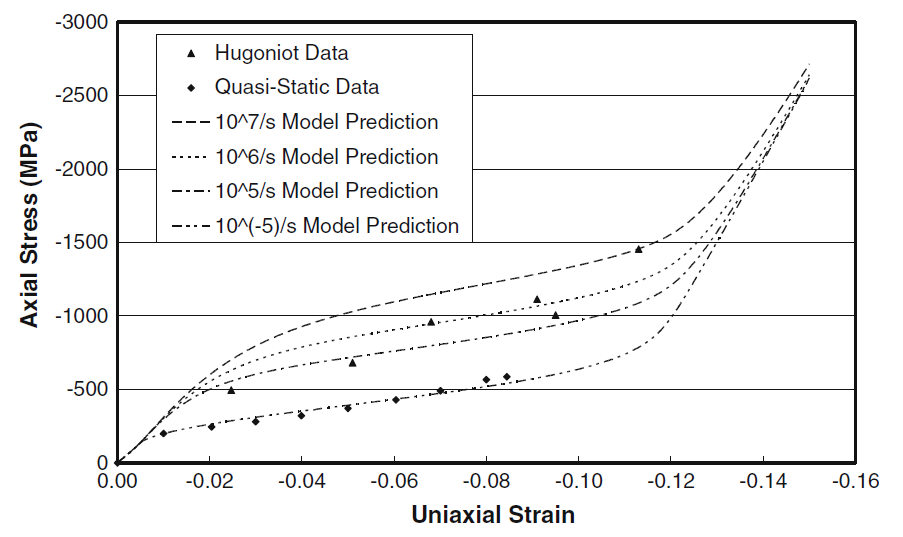
This paper summarizes the results of a theoretical and experimental program at Sandia National Laboratories aimed at identifying and modeling key physical features of rocks and rock-like materials at the laboratory scale over a broad range of strain rates. The mathematical development of a constitutive model is discussed and model predictions versus experimental data are given for a suite of laboratory tests. Concurrent pore collapse and cracking at the microscale are seen as competitive micromechanisms that give rise to the well-known macroscale phenomenon of a transition from volumetric compaction to dilatation under quasistatic triaxial compression. For high-rate loading, this competition between pore collapse and microcracking also seems to account for recently identified differences in strain-rate sensitivity between uniaxial-strain ‘‘plate slap’’ data compared to uniaxial-stress Kolsky bar data. A description is given of how this work supports ongoing efforts to develop a predictive capability in simulating deformation and failure of natural geological materials, including those that contain structural features such as joints and other spatial heterogeneities.

Available online:

http://dx.doi.org/10.1007/s11440-006-0010-z
http://www.mech.utah.edu/~brannon/pubs/7-2006FossumBrannonMechanismDependentViscoplasticity.pdf

Publication: Assessment of the applicability of the Hertzian contact theory to edge-loaded prosthetic hip bearings.

Sanders, A. P. and R. M. Brannon (2011). “Assessment of the applicability of the Hertzian contact theory to edge-loaded prosthetic hip bearings.” Journal of Biomechanics 44(16): 2802-2808.

Abstract

The components of prosthetic hip bearings may experience in-vivo subluxation and edge loading on the acetabular socket as a result of joint laxity, causing abnormally high, damaging contact stresses. In this research, edge-loaded contact of prosthetic hips is examined analytically and experimentally in the most commonly used categories of material pairs. In edge-loaded ceramic-on-ceramic hips, the Hertzian contact theory yields accurate (conservatively, <10% error) predictions of the contact dimensions. Moreover, the Hertzian theory successfully captures slope and curvature trends in the dependence of contact patch geometry on the applied load. In an edge-loaded ceramic-on-metal pair, a similar degree of accuracy is observed in the contact patch length; however, the contact width is less accurately predicted due to the onset of subsurface plasticity, which is predicted for loads >400N. The Hertzian contact theory is shown to be ill-suited to edge-loaded ceramic-on-polyethylene pairs due to polyethylene’s nonlinear material behavior. This work elucidates the methods and the accuracy of applying classical contact theory to edge-loaded hip bearings. The results help to define the applicability of the Hertzian theory to the design of new components and materials to better resist severe edge loading contact stresses.

Available online:

http://dx.doi.org/10.1016/j.jbiomech.2011.08.007;


Recommended reading for aspiring writers

I’ve been doing a lot of writing lately.  I’ve come to believe that writing well is at least as important for engineers as calculus.  This past semester I took a dissertation writing class from the writing department here at the University of Utah.  It was very interesting to read dissertations from fields as diverse as literature, material science, nursing and nuclear engineering.  I think that it’s safe to say it was beneficial for everyone involved.  One nice resource that another student suggested, is a book title “The Elements of Style” by William Strunk and E.B. White.  Yes that’s E.B. White of “Charlotte’s Web” fame.  I picked up a copy of the book at the library and have found it an excellent, and readable, resource for writing well.  I’ve also discovered that nearly everyone else on the planet knew about it and I was somehow left in the dark.  So for any of you who might still be in the dark about this wonderful resource I highly recommend it.

Verification Research: The method of manufactured solutions (MMS)


MMS stands for “Method of Manufactured Solutions,” which is a rather sleazy sounding name for what is actually a respected and rigorous method of verifying that a finite element (or other) code is correctly solving the governing equations.

A simple introduction to MMS may be found on page 11 of The ASME guide for verification and validation in solid mechanics. The basic idea is to analytically determine forcing functions that would lead to a specific, presumably nontrivial, solution (of your choice) for the dependent variable of a differential equation.  Then you would verify a numerical solver for that differential equation by running it using your analytically determined forcing function.  The difference between the code’s prediction and your selected manufactured solution provides a quantitative measure of error.

Continue reading

Reciprocating edge-load wear test of artificial hip bearings

Movie: edge load wear test of hip prostheses

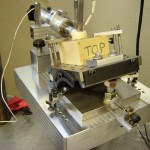
This short movie shows a novel wear test for artificial hip bearings. This test focuses on what may be the most severely damaging scenario that artificial hips experience in the human body. In some patients, the hip joint may partly separate under certain circumstances, and when that happens, the typically congruent contact between the ball and socket can quickly become a non-conforming contact between the ball and the socket’s edge. In that scenario, the contact between the ball and socket has the potential to cause increased wear, because the contact stress is much greater.

hip wear test set-up

The test apparatus applies a horizontal load to the femoral head (the ball), which forces the head into contact with the socket’s edge. Meanwhile, the acetabular liner is reciprocated up and down at a rate of 1 cycle per second. Several aspects of the test set-up may be configured as desired, including the magnitude of the horizontal force, the orientation of the acetabular liner, and the speed of reciprocation.

This test method is yielding valuable information about the performance of artificial hip bearings under worst case conditions. The findings of several focused studies will be published in the scientific literature relevant to the field of orthopedic implants and joint arthroplasty.

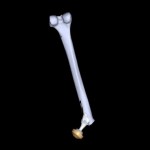
Animation showing set-up of femoral head reduction test

Animation: Biomechanical reduction test set-up

This short animation illustrates the set up of a femoral head reduction test. The items shown – a femur, a femoral stem with a femoral head, and an acetabular liner – will be tested in a manner that simulates the instantaneous reduction that occurs to a subluxed femoral head upon heel strike during human gait.

Continue reading

Publication: Experimental Assessment of Unvalidated Assumptions in Classical Plasticity Theory

Abstract: This report investigates the validity of several key assumptions in classical plasticity theory regarding material response to changes in the loading direction. Three metals, two rock types, and one ceramic were subjected to non-standard loading directions, and the resulting strain response increments were displayed in Gudehus diagrams to illustrate the approximation error of classical plasticity theories. A rigorous mathematical framework for fitting classical theories to the data, thus quantifying the error, is provided. Further data analysis techniques are presented that allow testing for the effect of changes in loading direction without having to use a new sample and for inferring the yield normal and flow directions without having to measure the yield surface. Though the data are inconclusive, there is indication that classical, incrementally linear, plasticity theory may be inadequate over a certain range of loading directions. This range of loading directions also coincides with loading directions that are known to produce a physically inadmissible instability for any nonassociative plasticity model.

You may download the full report here.